
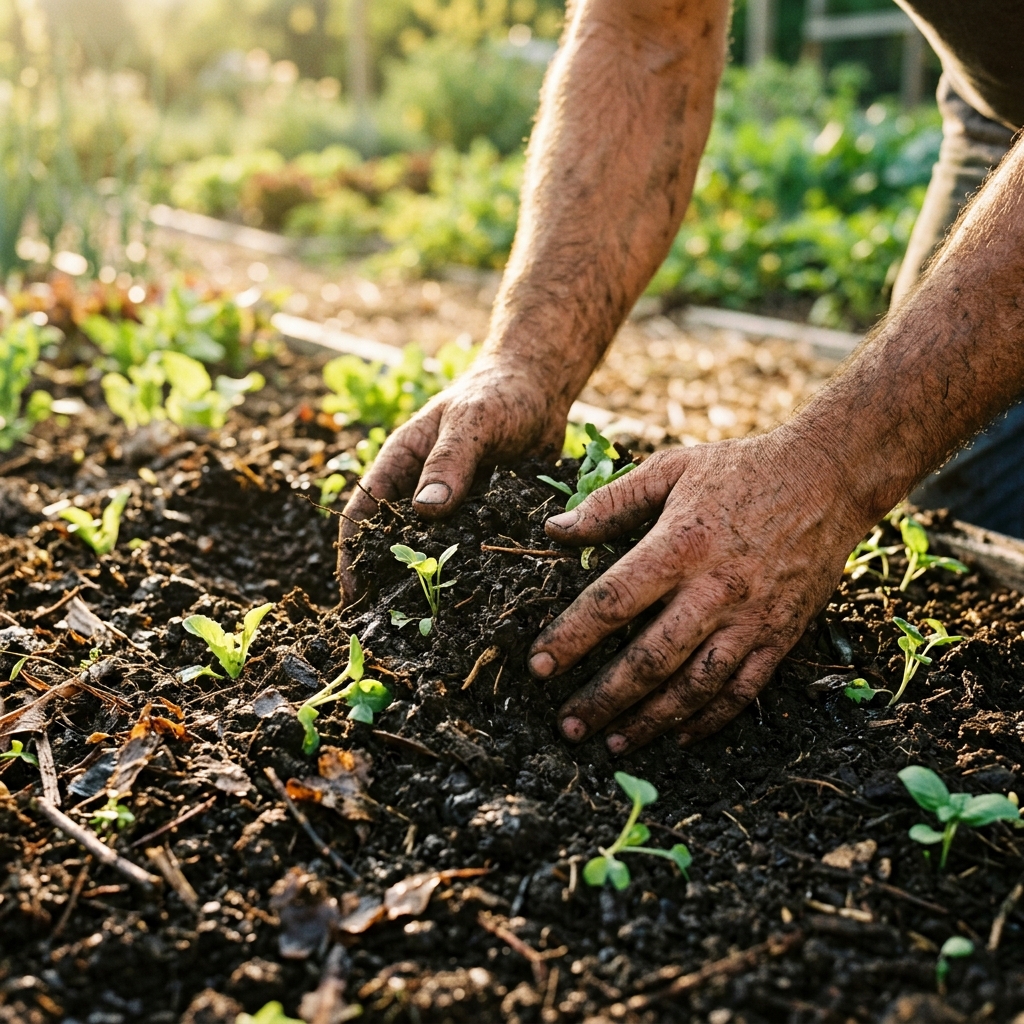
Chemical fertilizers feed the plant directly with synthetic salts while degrading the living biology of the soil. In Subhash Palekar Natural Farming (SPNF) and Vedic agriculture, our philosophy is entirely different: we feed the soil’s living microorganisms, and the microbial ecosystem feeds the plant.
What Is Jeevamrut?
Jeevamrut is a powerful biological microbial culture formulated from five indigenous ingredients. A single gram of native Gir cow dung contains over 300 to 500 million beneficial bacteria, actinomycetes, and mycorrhizal fungi. When fermented with organic jaggery and pulse flour, these microorganisms multiply exponentially into billions of living colonies.
Authentic 200-Liter Jeevamrut Recipe & Proportions
- Water: 200 Liters (chlorine-free, well or rain water)
- Desi Cow Dung (Gobar): 10 kg (fresh dung from an indigenous Gir cow)
- Desi Cow Urine (Gaumutra): 5 to 10 Liters (aged cow urine is potent)
- Natural Jaggery (Gur): 1 to 2 kg (chemical-free black or brown jaggery)
- Pulse Flour (Besan): 1 to 2 kg (gram, moth, or moong pulse flour)
- Virgin Forest / Bund Soil: A handful (50-100 grams) of living undisturbed soil
Step-by-Step Fermentation Method
- Fill a 200-liter plastic drum with clean well water in a shaded location (direct sunlight kills microbes).
- In a separate bucket, blend 10 kg of cow dung with 5 liters of cow urine into a smooth slurry, then pour it into the drum.
- Dissolve 2 kg of unrefined jaggery and 2 kg of besan in lukewarm water and stir thoroughly into the drum.
- Add a handful of undisturbed soil gathered from beneath an old Banyan tree or field border to inoculate ancestral strains of earth biology.
- Stir the barrel clockwise for 2 minutes using a wooden staff every morning and evening.
- Cover the top with a damp jute gunny bag. In 48 to 72 hours, an intoxicating sweet-fermented aroma will announce that your Jeevamrut is fully mature!
Application on Crops
Jeevamrut can be filtered through a fine mesh and applied directly through drip irrigation or flooding furrows at 200 liters per acre twice every month. Within weeks, native earthworms (Anecic and Endogeic worms) return to the surface, boring vertical aeration channels that convert tough clay into loose, rich black humus.